Window Tinting Tips & FAQ
Everything you need to know about aftercare, curing stages, ammonia-free cleaning, and California Vehicle Code § 26708 window tint compliance from Fresno's tint authority.
The Golden Rules of Tint Care
Keep Windows Up for 3–5 Days
Your newly installed window film is applied with a specialized water slip solution. During the first few days, this moisture is gradually evaporating through the film's microscopic pores. Rolling your windows down before the adhesive cures can snag the film edge against rubber seals, causing bubbling or peeling.
Never Use Ammonia Cleaners
Avoid standard blue household cleaners like regular Windex. Ammonia chemically reacts with polyester films and adhesives, breaking down UV inhibitors and causing the film to turn purple, crack, and delaminate. Always choose ammonia-free glass cleaner (e.g. Sprayway) or mild soapy water.
Use Clean Microfiber Towels
Rough paper towels, shop rags, and dirty sponges contain abrasive wood fibers and trapped grit that will swirl and scratch the protective hardcoat layer over time. Always wipe tinted windows with a soft, clean microfiber towel folded into quarters.
Sunlight Accelerates Curing
Parking your vehicle outdoors in direct California sunlight accelerates the evaporation of mounting moisture. If you notice small water blisters or a hazy milky appearance during the first 48 hours, don't worry—this is completely normal and disappears as the adhesive cures.
Seatbelt & Ring Caution
Be gentle when releasing seatbelts. Metal buckle tongues springing back against door glass can ding or puncture window film. Additionally, turn rings inward when cleaning inner glass surfaces to prevent accidental scratches.
Understanding the Dot Matrix
Most vehicle windows feature a border of black ceramic dots called the "frit" or dot matrix. Because these dots are raised above the glass surface, film sits on top of them, occasionally creating a slight lighter border. This is normal automotive glass geometry.
California Window Tint Laws (CVC § 26708)
California has specific legal standards regarding visible light transmission. MP Tinting ensures that you understand your legal options and risk levels before selecting your shade package.
Windshield Guidelines
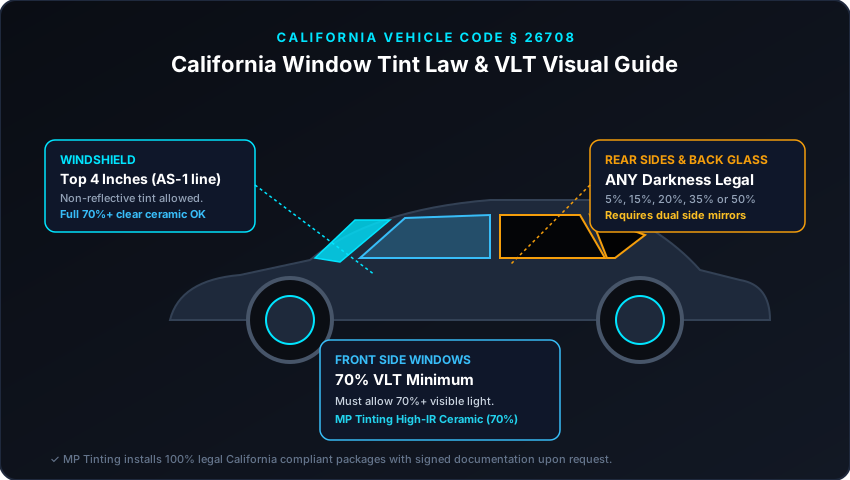
Non-reflective tint is legal along the top 4 inches of the windshield (above the manufacturer's AS-1 line). Full clear 70% nano-ceramic film is widely used to block heat without impeding night visibility.
Front Driver & Passenger Sides
Must allow a minimum of 70% visible light transmission (70% VLT). Since factory clear automotive glass typically meters around 75-80% VLT, our 70% clear nano-ceramic film provides maximum heat rejection while keeping you compliant.
Rear Sides & Back Windshield
Any darkness is 100% legal in California for the rear passenger windows and back glass (including 5% limo tint and 20% factory match), provided your vehicle has functional left and right exterior side mirrors.
The Curing Science Behind Master Installs
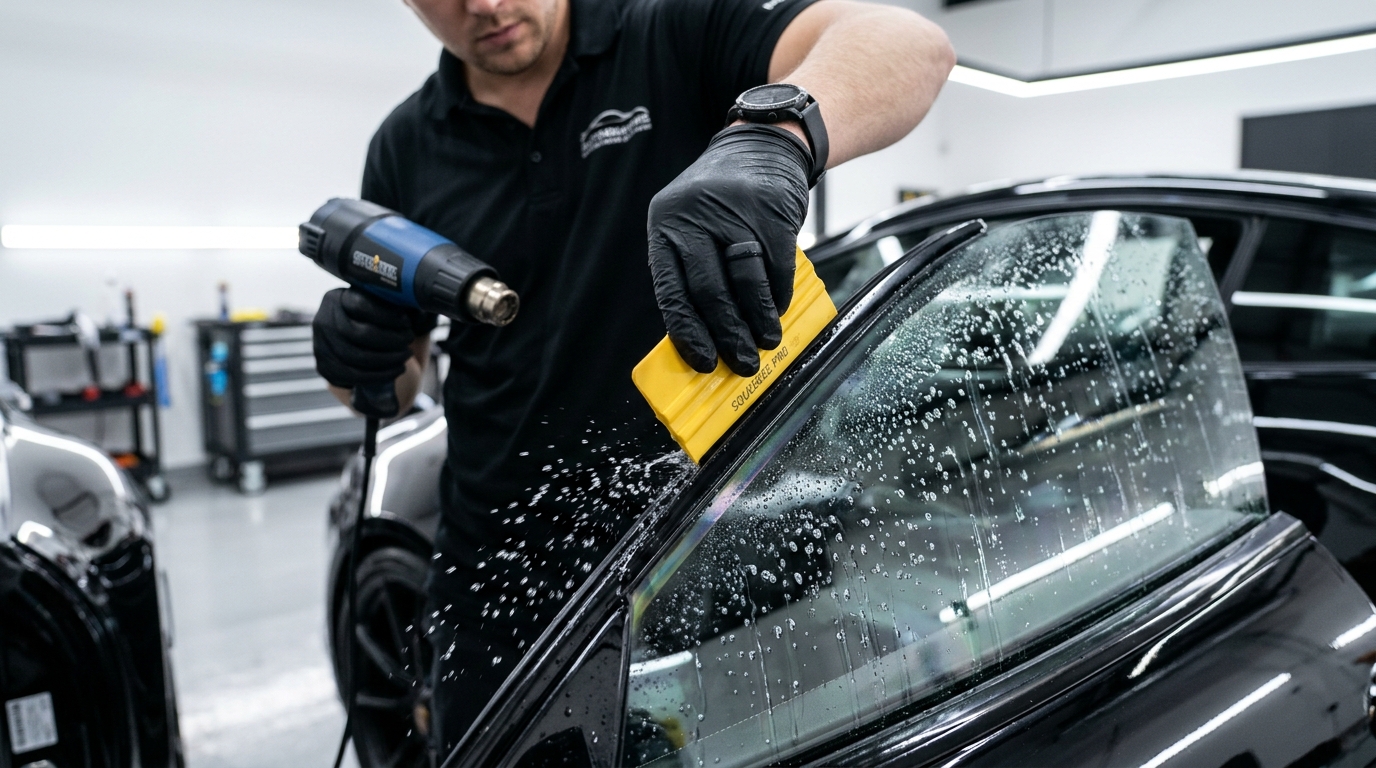
When our technicians squeegee out the mounting slip solution, 99% of liquid is evacuated immediately. The remaining 1% of microscopic moisture forms tiny water pockets that naturally evaporate through the film membrane as the vehicle sits under California sunshine.
Allowing the full 3 to 5 day curing window without rolling down your windows ensures the high-tack pressure-sensitive adhesive sets permanently against the automotive glass.
Frequently Asked Questions
For most standard coupes and sedans, a full vehicle installation (all side windows and rear windshield) typically takes between 1.5 to 2.5 hours. Two front doors usually take around 45 to 60 minutes. You are welcome to relax in our clean waiting lounge with complimentary WiFi, or drop off your vehicle and pick it up once completed.
Standard dyed film is simply dark polyester colored with dye; it darkens your windows but absorbs heat and radiates it inward. Nano-ceramic film is engineered with sub-microscopic ceramic particles that actively reflect up to 98% of infrared heat radiation while allowing natural visibility. It also never turns purple or fades, and comes backed by a lifetime warranty.
No. When installed by our certified technicians, window film adheres cleanly over defroster grid lines without causing damage. During removal of old film, we use specialized commercial steam vaporizers rather than sharp razor blades to protect and preserve every copper defroster line.
Yes. California law allows motorists with severe medical light sensitivities (such as lupus, melanoma, photophobia, or porphyria) to obtain a signed exemption from a licensed physician or dermatologist. You must carry this signed medical authorization inside the vehicle at all times.
Do not attempt to press or pop these moisture pockets. This haze is residual slip solution evaporating through the film. As the car sits in warm weather over the next 3 to 7 days, this moisture will completely evaporate, leaving the glass optically crystal clear.
Yes. Every carbon and nano-ceramic package installed at MP Tinting comes with a written nationwide lifetime warranty that protects you against peeling, bubbling, cracking, delamination, and color fading. We take full pride in our craft.
Yes, absolutely. Factory privacy glass is colored glass with minimal infrared heat rejection. By applying our nano-ceramic film over factory privacy glass, you drastically boost heat rejection up to 98% while keeping the vehicle dark and private.
Yes. Frameless glass automatically dips down slightly when opening the door. Our technicians use digital cut patterns that compensate for door indexing and micro-bevel the top film edge so it never catches or rolls up when closing the door.